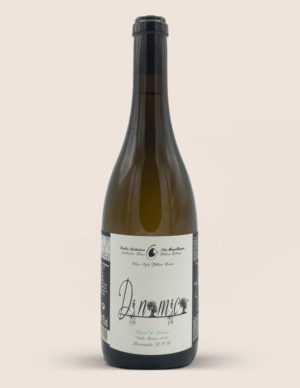

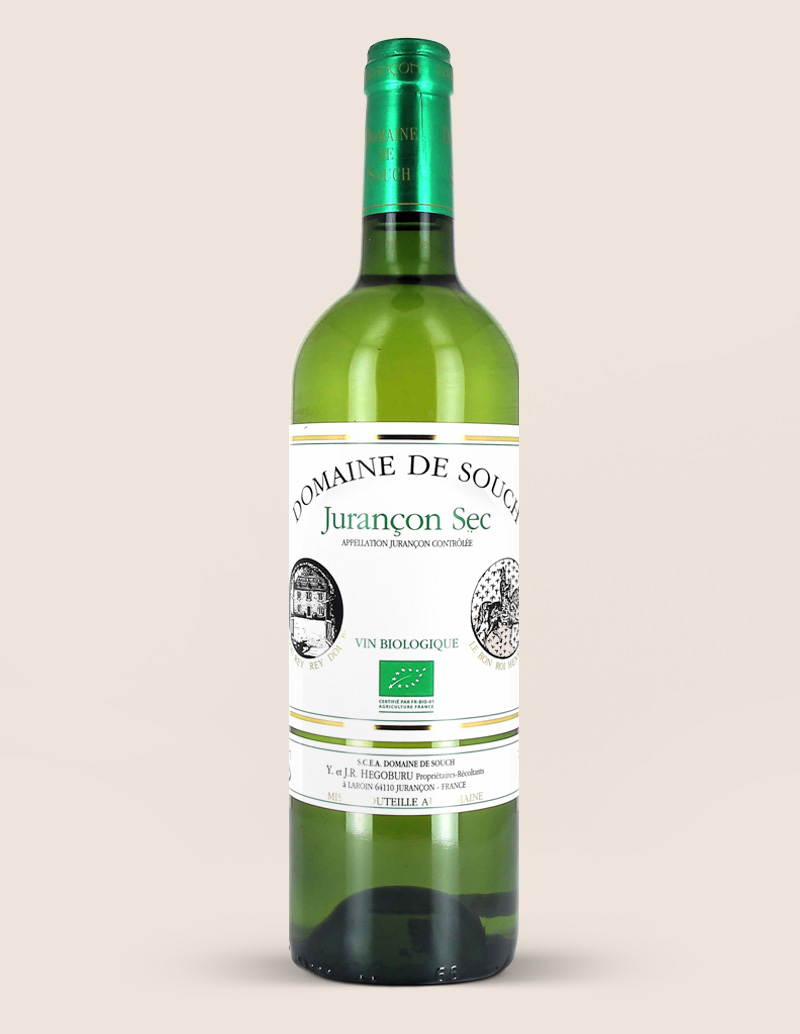
Domaine De Souch Jurançon Sec 2016
$73.00 inc. GST
AROMA: Absolutely tremendous fruit purity with grapefruit, starfruit, really exotic and characterful.
PALATE: Exotic fruits balanced by zesty acidity, mineral undertones, clean and precise and lots of tension. Dry.
FOOD MATCH: Oysters and Shellfish.
Grape Variety: 60% Gros Manseng, 30% Petit Manseng, 10% Courbu
Drinking window: 2022-2032+
Alc. 12, 50%

52 in stock
Description
Domaine de Souch is located on the first foothills of the Atlantic Pyrenees in the heart of the Bearn, situated near Pau and the Pyrénées mountains in the South West of France, – the original homeland of Henry the IV – at an altitude of 332m. The vines are planted on the hillside, facing south and overlooking the Pyrenees and the Pic du Midi d’Ossau. The estate has been under biodynamic management since 1994. Vines are planted on the south-facing hillside and are made up of 50 per cent Petit Manseng and 50 per cent Gros Manseng. These vines are known for their sweet flavours and late harvests. Aside from their unique sweetness, these wines are perhaps best known historically as those used to rub the lips of King Henry IV of Navarre at his baptism, granting him courage and charisma (so the story goes).
Domaine de Souch is a 6,5 hectares wine estate created by Yvonne Hegoburu, a “Grande Dame” with a particular story. In the beginning of the 1970’s, Yvonne and René (her husband) found the ruins of an old house at the top of the hill of Laroin and decided to renovate it in order to retire there. Later, they retired together and had the ambition to plant a few acres of vineyards in the Jurançon appellation. However her husband René died prematurely before they could realize their project. A little while after her hubsand’s death in 1987, Yvonne took the decision to complete their dream and to honour the memory of her lamented René, she planted 6,5 hectares of vineyards around the house. After a couple of years, she produced her 1st vintage in 1990. It was well recognized and welcomed by the professionals which motivated Yvonne to keep going on. Friend with Pascal Delbeck, at this time vineyard manager of Château Belair in Saint Emilion, introduced her to the biodynamic principles in viticulture. Principles that she soon implemented in the whole vineyard in 1994.
Since 1994, the vines have known no chemical treatments of any kind and are taken care of the traditional way. Located 300 metres above sea level, the domaine has soils made of gravelly clay with calcareous components called in French “poudingues“. There are 3 different grape varieties planted: 70% of Petit Manseng, 20% of Gros Manseng and 10% of Courbu vines. The winemaking is of course respectful of the grapes with minimum intervention and low added sulphites. Yvonne also uses old oak barrels for the ageing of some cuvées, including a few that were given by the late famous Didier Dagueneau who was a good friend of her. Hand-harvested, Indigenous yeast fermentation, No Fining, No Filtering, No added Sulphites, 58Total sulphites (mg/L), Suitable for Vegetarians, Suitable for Vegans.
This dry white has the freshness of the big manseng, the fruity notes of the little courbu and the exotic volume of the small manseng. Vinified in stainless steel vats, it has a very beautiful complexity. In 2013, a nervous white with a beautiful volume:
Terroir: Clay and limestone soil with puddingstone, “Poudingue” in French. The vineyard is located on a upper reaches of a hilly valley side with south exposure facing Pyrenees Mountains and Pic du Midi d’Ossau.
Additional Information
| brand | |
|---|---|
| size | |
| vintage | 2016 |
| biodynamic | Certified |
Reviews / Ratings / Awards
Winefront
Domaine De Souch Jurançon Sec 2016 – 95 / 100 Points
“Grown on the foothills of the Pyrénées Atlantique at an altitude of 332m. Raised in stainless steel. Biodynamic since 1994. Gros manseng, Petit manseng and Courbu blanc. Smoky leaf, wet gravel in an old cellar, honey, jasmine, fresh apricot and pineapple. Light and fresh, chalky, with dessert wine succulence, and yet so dry and tight with crunchy acids. Ripe lemon zing on the finish. What an engaging wine this is. A delight to drink too.
– Gary Walsh